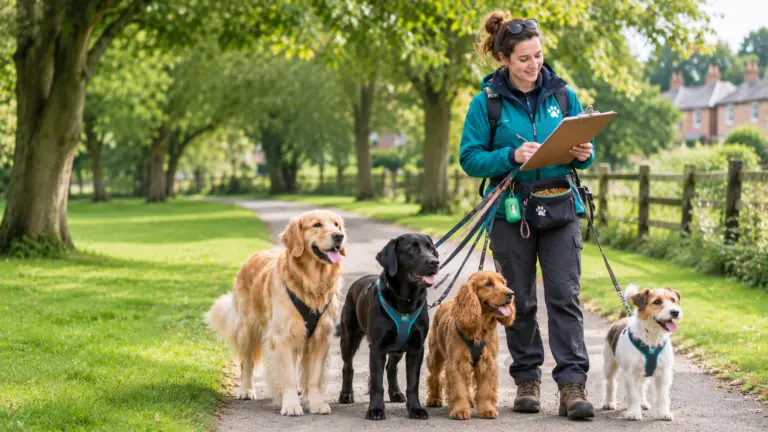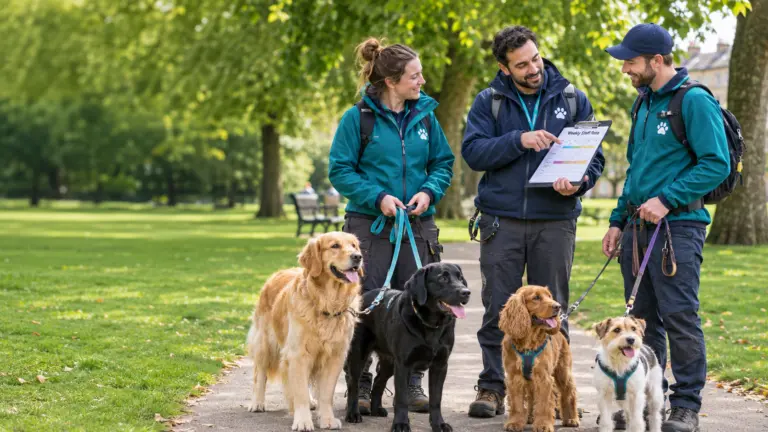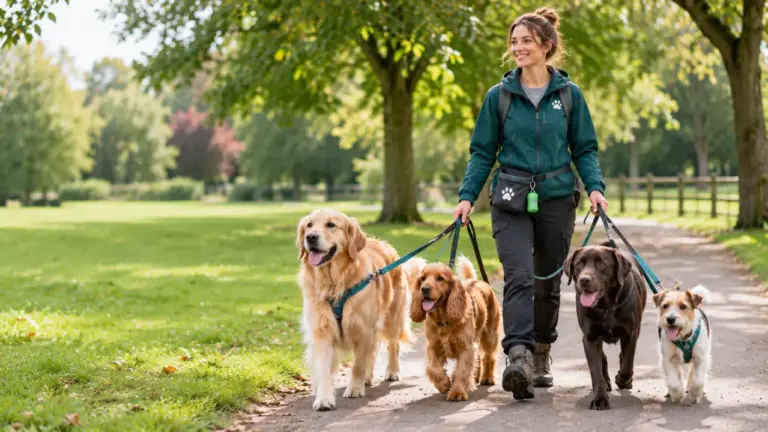

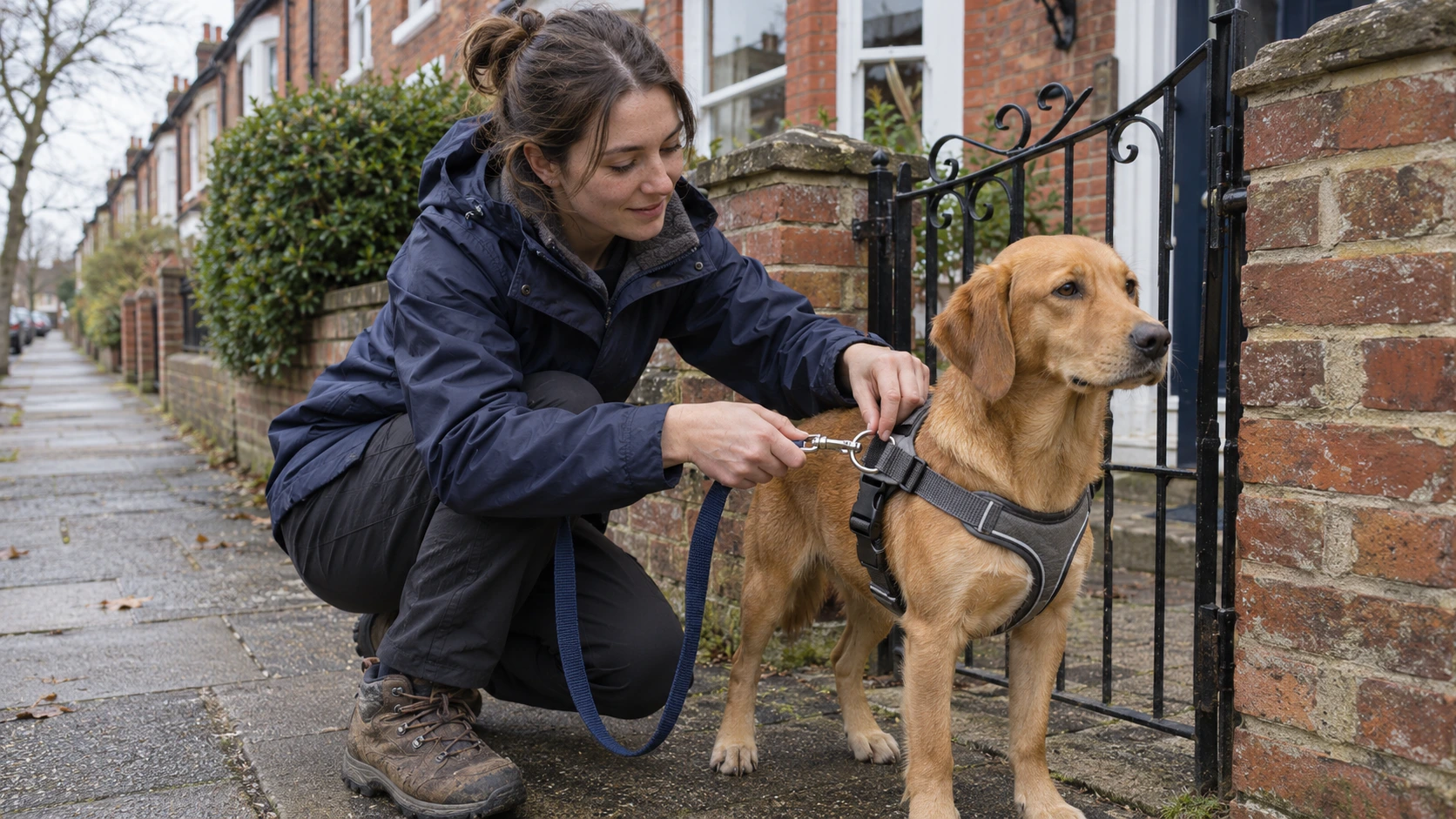

Start with one service in one small area. Before advertising, check whether your council or land manager requires a commercial dog-walking licence or permit for the places you plan to use, even if you only offer solo walks. Before taking your first paid walk, arrange insurance that covers how you work, set a price that includes travel and admin, and agree how clients will book and pay. A solo walk in a familiar neighbourhood is a practical place to begin while you learn how long collections, handovers and travel really take.
1. Decide what you’ll offer and where
Write down the walk length, collection area, days and times you can offer, and whether you’ll walk dogs individually or in groups. Tell owners whether the advertised time means time walking or the whole period their dog is away from home. Decide what you’ll do if a dog needs a different pace, cannot travel with other dogs or cannot be safely walked with the group.
For example, offer 30-minute solo walks in one neighbourhood on three weekdays. Time a practice round that includes parking, collecting the dog, the walk, returning the dog and sending an update. If that takes 55 minutes, give the booking enough space in your diary before offering the next slot.
2. Check the rules for your actual routes
Check your council’s rules and the terms set by the park or land manager before advertising walks there. Look for commercial walking permits, maximum group sizes, lead rules, restricted areas and any conditions on access. Check every area on your route if it crosses a council boundary. For group walks, use the lowest limit set by local rules, the site operator, your insurance and the number of dogs you can safely handle. Start with the local council finder and check signs at the sites you intend to use.
In England, for example, Wandsworth requires a licence for professional dog walking in its parks and open spaces. In Wales, councils can set local restrictions, as shown in Carmarthenshire’s guidance on dog orders. In Scotland, read the Scottish Outdoor Access Code guidance for commercial dog walkers. In Northern Ireland, check nidirect’s guidance on controlling dogs in public alongside local council and site rules.
If you later add daycare or home boarding, check those requirements separately before offering the service. England, for instance, has separate licensing guidance for dog daycare and home boarding.
3. Arrange insurance and set up your records
Ask insurers to confirm what your policy includes in writing. Public liability and cover for dogs in your care address different risks. Check the policy wording for each of these before paying for cover.
- Public liability. Check the limit against any permit conditions and ask what the policy covers if a dog injures someone or damages property.
- Care, custody and control. Ask what happens if a dog in your care is injured or goes missing, and check exclusions and excesses.
- How you work. Confirm group sizes, off-lead walking, lost keys and any dog transport. If you use a vehicle, ask your motor insurer whether your intended business use and transport are covered.
- Hiring help. If you take on staff, check the first-time employer guidance, including employers’ liability insurance.
If you operate as a sole trader, keep records of income and costs from the start. HMRC generally requires you to register for Self Assessment if your gross trading income from all your trades exceeds £1,000 in a tax year. Gross trading income is what you earn before deducting expenses. Check HMRC’s sole trader registration guidance for other reasons to register and the deadline that applies to you.
4. Set a price before advertising
Price the time from collection to return, plus travel, updates and booking admin. Allow for costs such as fuel, parking, insurance and payment fees. A group rate needs to work on a day when you have fewer paying dogs than expected. Publish the walk duration, price, service area and any extra charges clearly. Use TailPro’s guide to UK dog-walking prices for published examples and a worked costing model.
5. Find your first clients close together
- Write a short service listing with your postcodes, walk length, availability, price and contact details. Explain whether you start with a meet-and-greet.
- Tell people who already know you, ask local pet businesses whether they accept referral cards, and share your listing in neighbourhood groups that allow business posts.
- Offer your first clients slots in the same area. Ask how each person heard about you and note which enquiries became regular bookings.
At the meet-and-greet, ask about triggers, recall, equipment, health needs and how the dog behaves near traffic and other dogs. Agree who can collect the dog, how you’ll get into the home, what happens in an emergency and when an owner can expect an update. If you’re unsure whether dogs will work together, assess them individually before offering a group walk.
6. Test your process before taking repeat bookings
Write down how you’ll handle cancellations, late collections, unsafe weather and missed access. Record the dog’s care instructions, emergency contact and vet details, and keep access details secure. Test one booking end to end, from enquiry and confirmation to payment and the owner’s update. Then check how you’d cancel or move it before setting up a recurring slot.
If you use TailPro, follow the online booking setup guide to configure one service with the right price and availability. The dog walking software page shows how recurring walks and customer updates can be organised as your diary grows.
Before your first paid walk
- Check the rules and permissions for the route you’ll use.
- Confirm your insurance covers the walk you’ve agreed to provide.
- Agree the price, collection window, cancellation terms and payment method.
- Record the dog’s care instructions, vet and emergency contacts, and safe access arrangements.
- Leave enough time for collection, the walk, return and the owner’s update.
Ready to put your first service in the diary? Start a free TailPro account and test a booking before sharing the link with customers.