

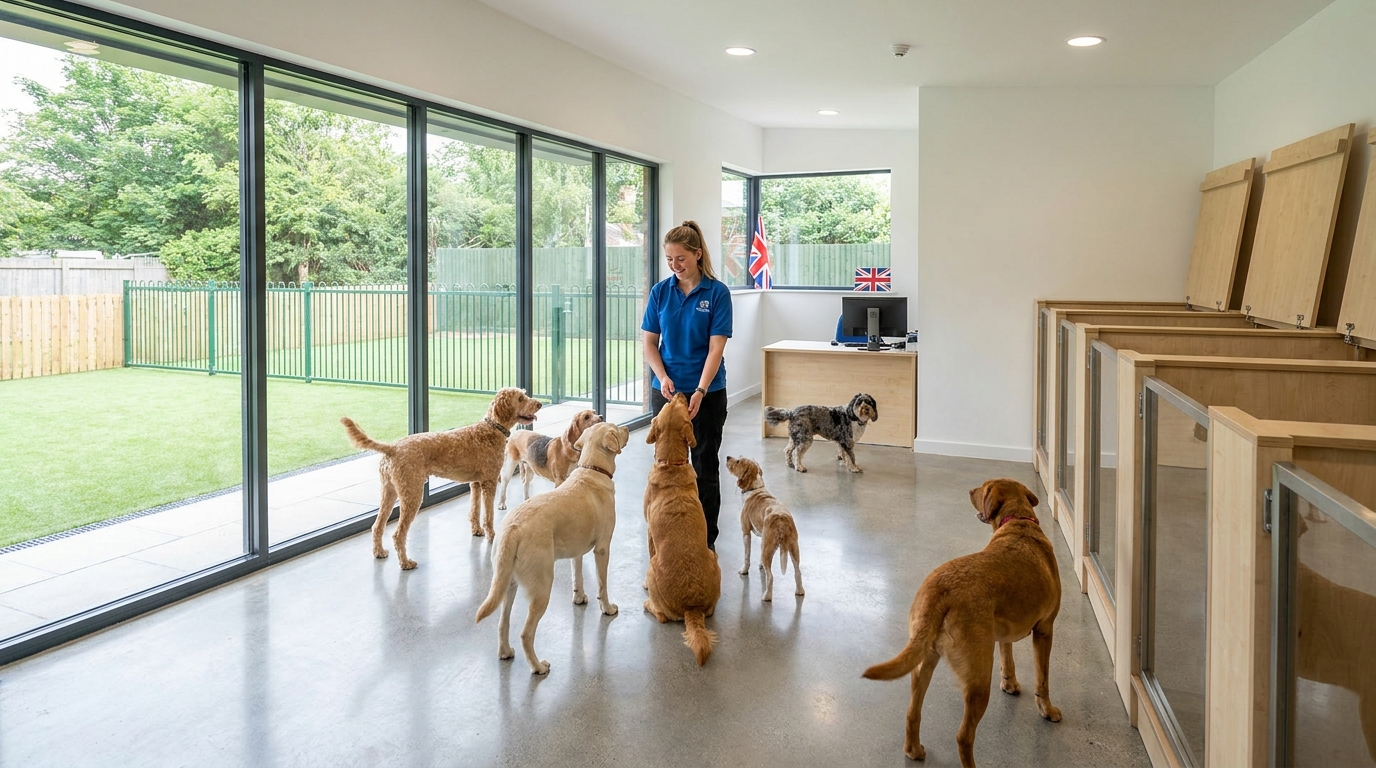

A new dog arrives for its first daycare session. The owner describes it as friendly and energetic, but during introductions, staff notice discomfort around unfamiliar dogs and toys.
Introducing the dog directly into a busy group could create unnecessary stress and safety concerns.
A structured dog daycare assessment helps businesses understand each dog’s behaviour, health and individual needs before deciding whether group daycare is suitable.
The solution is to review pet information, assess behaviour, check health requirements and record an informed admission decision.
Here’s a practical six-step approach, including how TailPro helps organise important care information.
1. Review the Dog’s Profile Before Admission
Before arranging the first session, collect essential information from the owner.
Check:
- Basic details: Age, breed, microchip information and daily routine.
- Health: Medical conditions, medication, allergies and dietary requirements.
- Behaviour: Experiences with unfamiliar dogs, people and group environments.
- Handling: Stress triggers, resource guarding concerns and settling preferences.
- Emergency contacts: Owner and veterinary information.
Clarify missing details and ask about previous daycare experiences.
How TailPro Helps
TailPro’s pet profiles keep important information, including temperament, allergies and care instructions, associated with individual dogs.
Its Review and Approve Customer Pet Profiles feature allows administrators to review customer-submitted pet information.
Client Handover Notes also allow owners to provide booking-specific instructions that staff can review before the dog’s arrival.
Pet profile approval supports information management; the daycare team must still assess whether the dog is suitable for admission.
2. Carry Out a Structured Dog Daycare Meet-and-Greet
A dog daycare meet-and-greet helps staff observe how a dog responds to unfamiliar surroundings, people and other dogs.
Assess:
- Confidence and comfort in the daycare environment.
- Responses to unfamiliar dogs and people.
- Behaviour around toys, food and shared resources.
- Signs of fear, anxiety, stress or overexcitement.
- Handling tolerance and ability to settle.
- Ability to relax and take breaks away from group activity.
Begin in a calm environment and introduce unfamiliar situations gradually.
Where appropriate, arrange carefully supervised introductions. Avoid forcing interactions or deliberately provoking resource guarding.
Practical action: Record the assessment date, staff member, observations, concerns and recommended next steps.
If significant welfare or safety concerns arise, stop the assessment and reconsider admission.
3. Record Behavioural Observations Clearly
A young spaniel may appear comfortable around people but become tense when another dog approaches its toy.
Rather than labelling the dog aggressive, record what happened.
Document:
- Situation: What triggered the response?
- Observation: What behaviour occurred?
- Staff action: How was the situation managed?
- Follow-up: Is further assessment necessary?
Factual records help staff understand individual behaviour and make consistent care decisions.
How TailPro Helps
TailPro’s Private Pet Notes allow staff to record internal behavioural, medical and handling information within a pet’s profile.
Authorised team members can review these notes before providing care, helping maintain consistent communication across shifts.
4. Check Vaccination Records and Health Requirements
Before accepting a dog into daycare, review its health information and supporting veterinary documentation.
For licensed dog daycare businesses in England, statutory licensing guidance requires appropriate vaccination evidence, including protection against canine parvovirus, distemper, infectious canine hepatitis and leptospirosis, alongside other relevant diseases. Primary vaccination courses must be completed at least two weeks before admission.
Refer to the official dog daycare licensing guidance for England and the conditions of your business’s licence.
Also confirm:
- Vaccination records: Check required vaccinations and supporting veterinary evidence.
- Medical conditions: Review health concerns, allergies and dietary requirements.
- Medication: Confirm prescribed medication, dosage and administration instructions.
- Veterinary details: Keep veterinary and emergency contacts available.
- Care requirements: Identify additional health precautions staff must follow.
Request missing information before making a final admission decision.
How TailPro Helps
TailPro’s pet profiles help businesses organise vaccination information, medical details, allergies and individual care instructions.
With Private Pet Notes, staff can record relevant medical and handling requirements for authorised team members to review.
Keeping this information associated with each dog helps staff prepare for admission and communicate individual care needs.
Staff remain responsible for checking vaccination evidence and confirming that the dog meets the daycare’s health and admission requirements.
5. Make an Informed Admission Decision
After reviewing the dog’s information, behaviour and health requirements, decide whether your daycare can safely meet its needs.
| Decision | Action |
| Approve | Admit with appropriate care arrangements |
| Request information | Obtain missing health or care details |
| Further assessment | Arrange additional supervised observation |
| Decline | Explain why group daycare is unsuitable |
Record the outcome using a consistent assessment format.
Dog Daycare Assessment Record
- Dog and owner: Name and identification details.
- Assessment: Date and responsible staff member.
- Behaviour: Observations, triggers and responses.
- Health: Required evidence checked and outstanding information.
- Decision: Approve, request information, reassess or decline.
- Follow-up: Care arrangements, restrictions or further actions.
If the assessment is inconclusive, arrange further observation rather than confirming admission prematurely.
Explain the outcome respectfully to the owner. A dog unsuitable for group daycare may still benefit from alternative care arrangements.
How TailPro Helps
TailPro’s Review and Approve Customer Pet Profiles feature supports administrative review of customer-submitted information.
Private Pet Notes help staff retain relevant observations and individual care instructions.
These features support information management. The daycare team remains responsible for making and documenting the behavioural admission decision and maintaining any required screening records.
6. Prepare Staff for the Dog’s First Day
Once admission is approved, ensure staff understand the dog’s individual requirements.
Share:
- Medical and feeding instructions.
- Handling preferences and stress triggers.
- Behavioural observations.
- Agreed care arrangements.
- Rest and supervision requirements.
- Situations requiring closer monitoring.
Introduce the dog gradually and monitor its comfort throughout the first session.
Provide opportunities to rest away from group activity and adjust arrangements if the dog shows signs of stress.
How TailPro Helps
Private Pet Notes give authorised staff access to internal care information, while Client Handover Notes provide owner-supplied booking instructions.
TailPro’s digital check-in and check-out features also support daycare attendance management.
Together, these features help staff prepare for arrivals and maintain organised care information.
Make Welfare the Starting Point for Every Booking
A responsible dog daycare assessment is about understanding each dog’s needs, not accepting every booking.
Reviewing owner information, observing behaviour, checking health requirements and documenting decisions helps businesses establish a consistent, welfare-first admission process.
Continue monitoring each dog’s wellbeing after admission and review care arrangements when circumstances change.
Keep Important Pet Care Information Organised with TailPro
TailPro helps daycare businesses organise pet profiles, owner-supplied handover instructions and private staff notes so relevant care information is easier to access.
With pet profile reviews, booking-linked handover notes and daycare attendance management, TailPro supports more organised daily operations.
Explore TailPro’s Pet Daycare Software to see how its features can help your team prepare for new arrivals and deliver consistent care.